
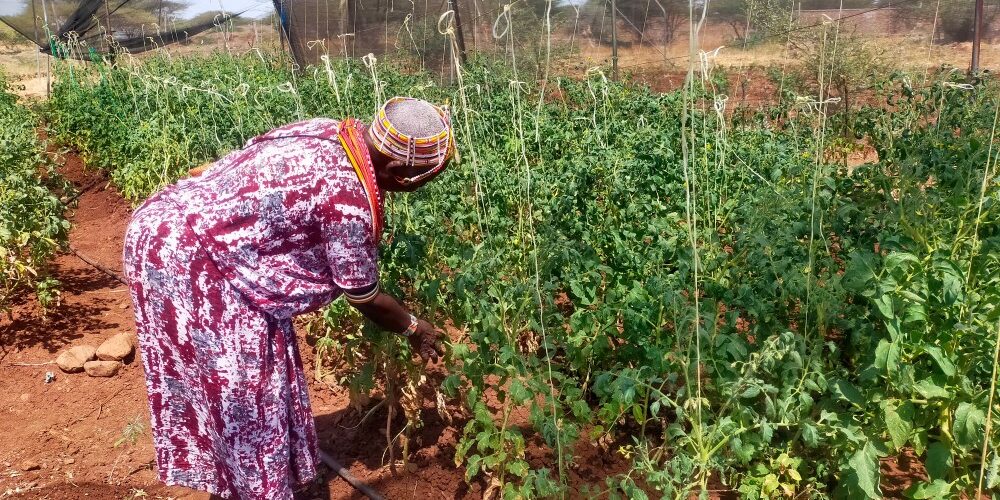
Project at a Glance
-
Funding: Global Green Grant Fund (GGF) & Tsadik Foundation
-
Location: Merigo & Nasunguyo Cultural Women’s Farm (5-acre plot) in Loglogo Ward
-
Key Outcomes to Date:
-
Cleared and tilled a 5-acre field
-
Renovated a 100,000-liter masonry water tank and repaired broken pipes
-
Installed greenhouse, drip irrigation piping, and connected to a local borehole
-
Planted 6,000 indigenous tree seedlings across surrounding rangelands
-
Trained 90 women and 20 youth in kitchen-garden techniques
-
Harvested over 300 watermelon fruits and distributed produce to more than 100 Rendille households.
-
Objectives
-
Enhance Food Security:
Provide a reliable source of fresh vegetables to at least 100 Rendille households, reducing reliance on sporadic food supplies during dry seasons. -
Generate Supplemental Income:
Enable women to sell surplus produce, particularly tomatoes, kale, and watermelons so household incomes increase and diversify beyond livestock sales. -
Promote Climate Resilience:
Introduce sustainable farming and agroforestry practices (e.g., kitchen gardens, tree nurseries, drip irrigation) that build long-term adaptability to unpredictable rainfall.
Activities
-
Land Preparation:
Mobilized 90 women and 20 youth to clear brush, remove debris, and till the 5-acre plot, laying the foundation for vegetable beds and tree nurseries. -
Infrastructure Development:
-
Water Tank Renovation: Repaired a collapsed 100,000-liter masonry tank and replaced damaged pipes.
-
Irrigation Setup: Installed drip-irrigation piping connected to a local borehole; constructed a small greenhouse to protect young seedlings.
-
-
Crop Cultivation:
-
Planted diverse vegetables: tomatoes, watermelons, kale, spinach, maize, sunflowers, capsicum, and onions.
-
Harvested over 300 watermelons, distributing them to participating households to supplement nutrition and income.
-
-
Training & Capacity Building:
-
Conducted hands-on workshops on seedling propagation, bed preparation, weeding, and pest management.
-
Provided practical sessions on preparing nutrient-rich meals from garden produce, addressing malnutrition among women and children.
-
-
Climate Adaptation Measures:
-
Distributed 6,000 tree seedlings to women’s groups and youth clubs for planting around household compounds.
-
Introduced vertical-garden techniques and integrate chicken rearing to maximize limited space and diversify protein sources.
-
-
Partnership & Collaboration:
-
Engaged CARTES (Center for Appropriate Rural Technology and Environmental Sustainability) to assess water needs and plan for drilling a dedicated borehole to secure irrigation year-round.
-
Challenges
-
Heavy Rains & Flooding:
Intense downpours washed out portions of the irrigation piping, leading to crop losses and unplanned repair costs. -
High Water-Pumping Expenses:
Reliance on diesel pumps to draw water from the borehole significantly increased operational costs, straining the project budget. -
Competing Water Demands:
Livestock remain the primary water consumers in pastoralist households, often leaving insufficient water pressure for irrigation underscoring the need for a separate water source.
Recommendations
-
Ongoing Training & Mentorship:
Continue regular refresher courses for women on garden upkeep, crop rotation, and organic pest control ensuring long‐term productivity. -
Dedicated Irrigation Borehole:
Secure funding to drill a new borehole exclusively for the farm and home gardens, reducing conflicts over shared water sources. -
Community Maintenance Fund:
Establish a small, jointly managed fund for spare parts and pipe repairs—empowering local women’s committees to perform timely fixes. -
Expand Agroforestry Nursery:
Increase tree nursery capacity to produce 10,000 seedlings next season, enhancing climate resilience through reforestation of degraded grazing areas.
Stakeholder Testimonial
“Our kitchen gardens have transformed not only our meals but our entire outlook on the future. With a new borehole, we’re confident our harvests and incomes will keep growing.”
— Sereya Eysimkeele, Merige Women’s Group
All activities are implemented in close collaboration with community elders, county authorities, and PPI’s technical team to ensure cultural relevance and local ownership.


