Proposed by: Pastoralists Peoples Initiative (PPI)
Background
Marsabit County has experienced recurrent inter-community conflicts for decades, involving the Borana, Rendille, Gabra, Samburu, Turkana, Daasanach, Burji, Garre, Sakuye and other communities. These conflicts have largely been driven by competition over pasture and water, livestock theft, political rivalry, historical grievances, boundary disputes, proliferation of small arms, youth marginalization, misinformation and the increasing impacts of climate change.
Some of the county’s most tragic incidents, including the Turbi Massacre and numerous cycles of retaliatory violence, have left deep social divisions, disrupted livelihoods and undermined development. The 2006 plane crash that claimed the lives of the late Minister Bonaya Godana and other leaders while on a peace mission to Marsabit remains a powerful reminder of the importance of sustained efforts to build peace in Northern Kenya.
Despite these challenges, Marsabit’s communities share a rich pastoral heritage founded on livestock keeping, Indigenous knowledge, customary institutions and centuries-old mechanisms for conflict resolution. The camel, revered across most pastoral communities in northern Kenya, symbolizes resilience, mobility, survival and shared livelihoods. It therefore offers a unique and culturally respected platform for promoting dialogue, reconciliation and peaceful coexistence.
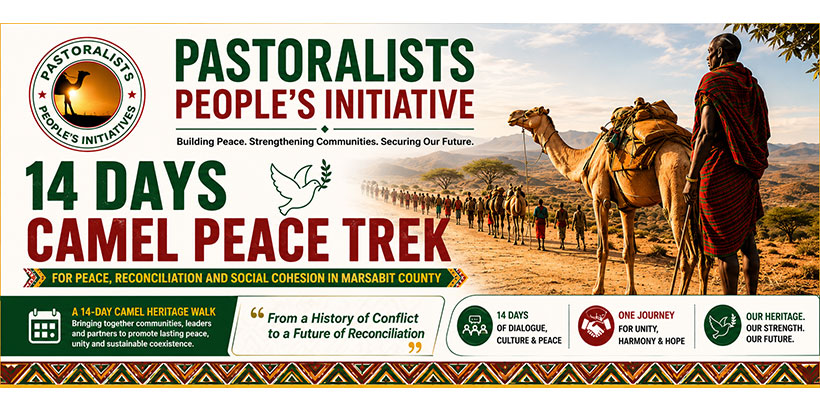
The Pastoralists Peoples Initiative (PPI) proposes to organize a five-day Camel Peace Trek across selected conflict-prone areas of Marsabit County. The trek will serve as a moving platform for dialogue, cultural exchange, peace education and collaborative action, bringing together elders, women, youth, religious leaders, government agencies, security actors and civil society organizations to renew relationships and strengthen local peace structures.
Goal
To promote lasting peace, social cohesion and sustainable coexistence among the diverse communities of Marsabit County.
Specific Objectives
- Promote dialogue and reconciliation among communities affected by recurring conflict.
- Revitalize Indigenous conflict resolution mechanisms and customary peace agreements.
- Encourage collaborative management of grazing lands, water sources and livestock migration corridors.
- Build trust through shared travel, cultural exchange and community interactions.
- Raise public awareness on peaceful coexistence, constitutional rights and human rights.
- Document Indigenous peace practices and successful local reconciliation initiatives for future generations.
Proposed Route
The five-day trek will begin at the Rendille Cultural Centre and travel through Karare, Kituruni, Leyai, Songa, Badassa, Kate, Turbi, Marsabit Town, and the Chalbi Desert with stopovers along the route.
Dialogue forums, cultural performances, traditional ceremonies and peace meetings will be held at each stop. The trek will culminate near the site where the aircraft carrying the late Minister, Bonaya Godana and other senior government officials crashed while on a peace mission, symbolizing the county’s collective commitment to transforming a history of conflict into a future of reconciliation.
Support vehicles will accompany the camel caravan to provide logistics, medical support, security and communication.
Key Activities
- Community dialogue forums.
- Elders’ peace assemblies and traditional mediation sessions.
- Women’s peace forums.
- Youth leadership and peace education activities.
- Cultural festivals showcasing songs, dances and storytelling.
- Public awareness campaigns on peaceful coexistence and civic responsibility.
- Discussions on sustainable management of grazing lands, water resources and livestock mobility.
- Documentation of Indigenous peace building knowledge and success stories.
- Media engagement to amplify positive peace narratives.
Expected Results
The Camel Peace Trek is expected to contribute to:
- Increased trust and cooperation among Marsabit’s diverse communities.
- Renewed inter-community peace agreements and strengthened customary institutions.
- Reduced incidents of retaliatory violence and livestock raids.
- Improved collaboration in managing shared natural resources.
- Greater participation of women and youth in local peace processes.
- Stronger partnerships between communities, county government and security agencies.
- Improved early warning and rapid response mechanisms for emerging conflicts.
- Enhanced recognition and preservation of Indigenous peacebuilding knowledge.
- Greater resilience to climate-related resource conflicts.
Target Participants
The initiative will bring together representatives from all fourteen ethnic communities in Marsabit County, including elders, women leaders, youth representatives, religious leaders, peace committees, county and national government officials, security agencies, civil society organizations, development partners, cultural leaders, tourists and the media.
Expected Impact
The Camel Peace Trek will transform the camel from a symbol of pastoral livelihoods into a symbol of peace, unity and reconciliation. By combining Indigenous knowledge with contemporary peacebuilding approaches, the initiative will strengthen social cohesion, promote locally owned solutions to conflict and build resilient communities capable of peacefully managing shared resources and adapting to the growing challenges posed by climate change.
Rather than being a one-off event, the Camel Peace Trek is envisioned as the beginning of a sustained county-wide peace movement that reinforces dialogue, restores trust among neighbouring communities and lays the foundation for long-term peace and inclusive development across Marsabit County.